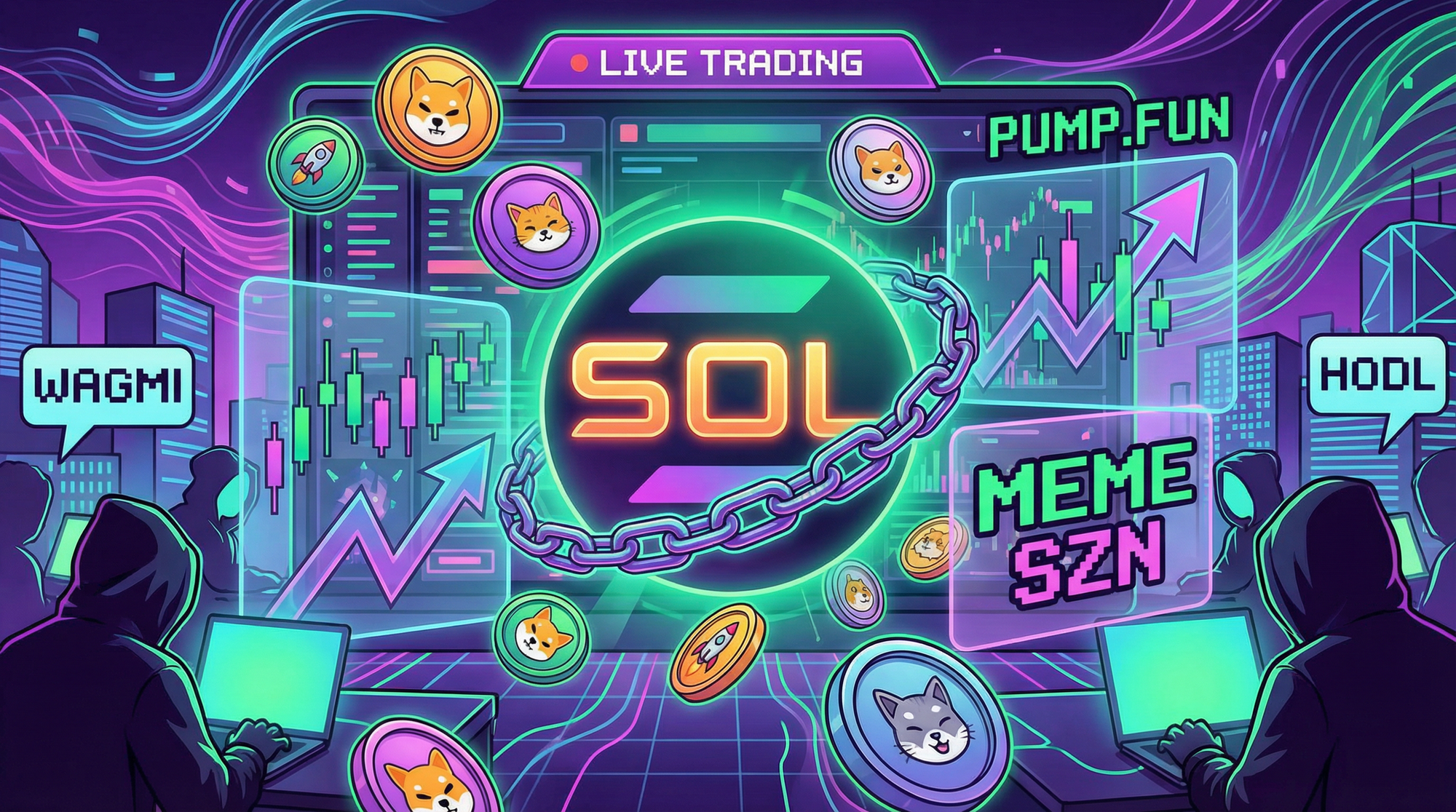
While critics dismiss memecoins as speculative noise, Solana's memecoin ecosystem tells a different story—one of technical superiority, cultural resonance, and legitimate economic activity that's reshaping crypto's narrative.
The Numbers Don't Lie
Solana's memecoin market has exploded to over $40 billion in total market cap, with platforms like Pump.fun processing more than $10 billion in trading volume monthly. This isn't just speculation—it's evidence of Solana's technical capabilities enabling a new form of participatory finance.
The platform's sub-second finality and sub-cent transaction costs create a trading environment impossible on Ethereum, where gas fees alone can exceed the value of small trades. This technical advantage has made Solana the natural home for high-frequency, small-cap trading.
Why Solana Won the Memecoin War
Three factors converged to make Solana the memecoin capital:
- Technical superiority: 400ms blocks and $0.00025 transactions enable retail participation at scale. You can trade $10 positions profitably—impossible on networks where fees eat your entire investment.
- Frictionless UX: Platforms like Jupiter and Raydium provide DEX experiences that rival centralized exchanges. No waiting for confirmations, no failed transactions from front-running, no surprise fee spikes.
- Community-first culture: Solana's developer and user community embraced memecoins as legitimate expressions of crypto culture rather than dismissing them as distractions. This acceptance created positive feedback loops attracting more creators and traders.
The Pump.fun Innovation
Pump.fun revolutionized token launches by eliminating technical barriers. Anyone can launch a memecoin in seconds without coding, liquidity provision, or understanding Solana's technical stack. The platform has facilitated over 6 million token launches, with successful projects automatically graduating to Raydium for broader trading.
This democratization created an explosion of creativity—from dog-themed tokens to cultural commentary to outright absurdism. While most tokens fail, the low barrier to entry encourages experimentation that occasionally produces genuine cultural phenomena and real economic value.
Beyond the Hype: Real Infrastructure Impact
The memecoin wave isn't just cultural—it's stress-testing and validating Solana's infrastructure at unprecedented scale. During peak memecoin mania, the network processes over 3,000 transactions per second consistently, proving its enterprise readiness.
This organic load testing benefits all Solana applications. When DeFi protocols or payment systems need to scale, they're building on infrastructure already proven to handle billions in daily volume from the most demanding user base in crypto—memecoin traders who expect instant execution.
The Trading Data Tells the Story
Jupiter DEX regularly processes $1-2 billion in daily volume, with memecoins accounting for 40-60% of activity. Raydium sees similar numbers. This volume represents real liquidity and price discovery, not wash trading or bot activity that plagues other chains.
The memecoin phenomenon has also driven wallet adoption. Phantom wallet grew from 3 million to over 7 million users largely on the back of memecoin trading, creating a user base that subsequently discovers DeFi, NFTs, and other Solana applications.
The Path Forward
As Solana continues optimizing with Firedancer and scaling solutions, the memecoin ecosystem will only accelerate. The combination of proven infrastructure, established liquidity, and cultural momentum creates a moat that's difficult for competing chains to overcome.
Whether you view memecoins as legitimate crypto innovation or speculative excess, their impact on Solana's growth is undeniable. They've brought millions of users on-chain, generated billions in economic activity, and proven that high-performance blockchain infrastructure enables entirely new categories of applications—even if those applications involve trading tokens named after dogs, cats, and internet memes.
That's not noise—that's adoption.